
There’s nothing quite as frustrating as stepping out to your vehicle and spotting a suspicious puddle beneath it. A coolant leak is one of those car issues that should never be ignored. Even if your car appears to be running smoothly, a minor leak today can escalate into a significant engine problem tomorrow. In this article, we’ll go over the importance of addressing coolant leaks.
How Does Coolant Work?
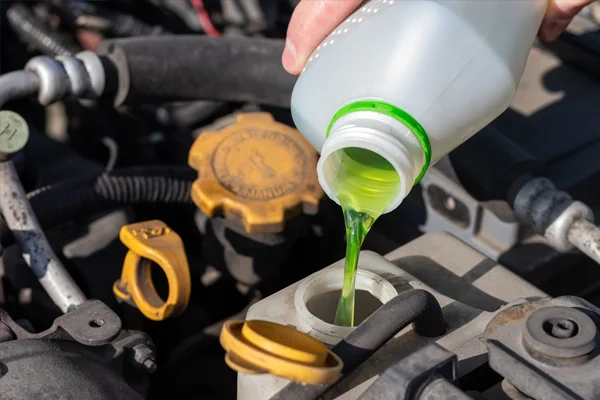
Coolant, which is also known as antifreeze, plays a crucial role in your engine’s performance. It helps regulate engine temperature by circulating through the engine block and radiator, absorbing heat and preventing freezing in colder weather. Without it, your engine could overheat, seize up, or suffer damage from frozen components.
What is a Coolant Leak?
Over time, it’s normal for the hoses and gaskets that keep the coolant within the closed cooling loop to wear, potentially allowing coolant to leak from the system, affecting the engine’s cooling capability. This cooling system relies on a constant supply of coolant through the engine to divert heat from the sensitive components. Even slight overheating could cause irreparable damage to critical parts like valves and connecting rods in a matter of minutes.
Signs Your Car Is Leaking Coolant
One of the most common symptoms is discovering a brightly colored puddle beneath your car after it’s been parked for a while. If the fluid under your vehicle is orange, green, or pink, it’s likely coolant. Modern vehicles include sensors that alert you to a low coolant level, so pay attention if your dashboard issues this warning. Another clue to look out for is a sweet, syrupy odor coming from under the hood. This is characteristic of antifreeze. Additionally, if your engine begins to overheat, especially in traffic or during hot weather, it may be due to a leak that is allowing coolant to escape. These signs, especially when combined, often indicate a coolant leak.
Common Causes Of A Coolant Leak
Cracked Radiator or Hose
Over time, it’s common for the radiator to develop cracks due to constant exposure to heat and vibration, while rubber hoses may become brittle or develop holes that allow coolant to escape.
Failing Water Pump
Another common cause is the water pump. Responsible for circulating coolant through the engine, the water pump can leak if its seals or bearings wear out. In many cases, a failing water pump will leave a visible trail of fluid beneath the engine bay.
Worn-out Gasket
Gaskets, in particular the head gasket, play a crucial role in maintaining a sealed system. When a gasket wears out or fails, coolant may leak externally or even mix with engine oil. In either case is trouble.
Loose Clamps or Connections
Loose hose clamps or weakened connections can let coolant escape, especially under pressure.
Corrosion or Wear In The Cooling System
If the cooling system hasn’t been properly maintained, like having the coolant changed at regular intervals, metal parts can corrode, leading to pinhole leaks in the radiator or other components.
Cooling System Maintenance & Repair in Kent, WA
If you’re experiencing coolant loss or any issue with out vehicles cooling system, don’t hesitate to reach out to the experts at Premier Automotive Services in Kent. Our team of ASE-certified technicians, certified by NAPA AutoCenter, AAA, and ASA, is committed to delivering top-notch service to keep your vehicle in peak condition. Don’t let coolant leaks linger and risk permanent damage to your engine; give us a call or schedule online to secure your appointment with our friendly team you can trust.